
Paver sealing for Panama Park homes
Paver Sealing in Panama Park, FL
Between Panama Park's boat ramp and its Main Street shops, call (904) 966-4279 for a free paver sealing estimate.
- Brings out deeper paver color
- Fresh joint sand helps lock pavers in place
- Gives weeds less room to grow
- Makes the surface easier to keep clean
- Free estimate, no obligation
Request a Free Estimate
Free, no obligation.
Fast, careful paver sealing in Panama Park
Paver sealing is available across Panama Park, from the brick-fronted blocks near 44th Street to the streets off North Main Street and the Trout River. A local contractor handles the wash, the sand and the coat on driveways, walks and patios, and the estimate is free. Should you book your free estimate, a local contractor writes back within 1 business day, usually much sooner.
Think of the driveway where the joints have emptied, the corner stays damp and the color has faded to chalk. A wash, new sand and a fresh coat tie it back together. Call (904) 966-4279 to describe your pavers, if you own the home or manage it for someone else.
Why hire a local paver sealing contractor in Panama Park?
Owners and landlords in Panama Park turn to a local paver contractor since two rivers, old street trees and a railroad split all shape the work. To see how that fits your block, book your free estimate.
Free visit, written price
A local contractor visits your Panama Park address for free and puts a price in writing.
A yardstick for any bid
Posted rates here span $1.75 to $3.25 per square foot, a handy way to judge a quote.
Landlords can ask too
About 57 percent of occupied homes in the ZIP are owner occupied, so a landlord or manager can request this estimate as well.
No strings attached
Choose the finish and the date yourself. Hearing a price in Panama Park does not commit you to anything.
Get Your Free Estimate in Panama Park
Tell us about your pavers in Panama Park.
Free, no obligation
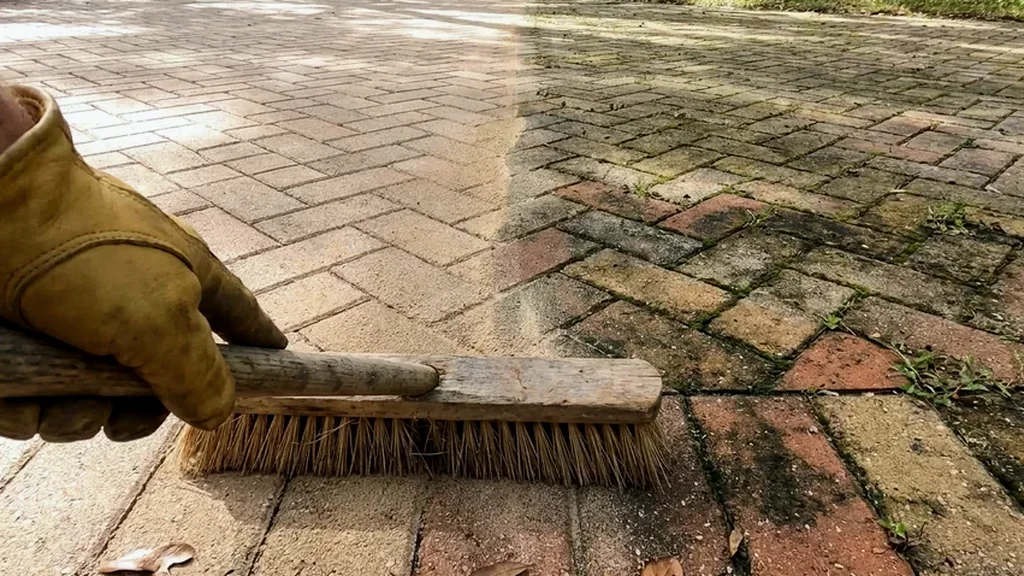
What paver problems show up most in Panama Park?
Trout River water in the yard
According to News4JAX, Nicole pushed the Trout River over its banks in November 2022, and many riverside homes took damage. Irma in 2017 flooded the Trout where it had not flooded in a long time. Pavers that sat in floodwater hold silt in the joints. Sealer would lock that silt in, which means washing comes first. Ask the contractor to check the lowest corner of the drive, since water settles there longest and sand loss tends to show first. The Trout is about half a mile wide where Main Street crosses it and 10 to 14 feet deep, so a lot beside it has a lot of water next door.
Washouts that start underneath
A Jacksonville company says sinking and washouts are the main reason pavers fail. Joint sand washes out, storm water reaches the base and erodes it, and trouble can start a couple of years after installation. Rain here is heaviest from May to September. A sunken spot gets reset before sealing, because sealer keeps whatever dip it covers. Reset work can add a day, and it is easier to plan when you know about it before the wash begins. USDA soil records for Duval County's Ortega series list fine sand more than 80 inches deep with rapid permeability.
Weight and turning tires
Jax Exterior Cleaning says a driveway carries a few tons every time a car pulls in, and that turning tires loosen joint sand and let pavers creep and settle. Drives that serve a truck or a work van take more of it. The curb end and the turn near the garage usually wear first. If cars turn on the same patch every day, a matte finish and fresh sand in those joints help hold the spot together longer.
Roots from old street trees
An early description counted more than 8,000 trees along Panama Park streets, including magnolias, oaks, olives and cedars. Roots can crack pavers or lift a section of walk. The same company says lifted areas are reset before sealing. If a walk near your tree has buckled, point it out. A sealed surface rinses clean more easily than a bare one, so leaf stain is simpler to deal with next season. An early promotional description listed magnolias, oaks, olives and cedars among those trees, so more than one kind of leaf may be landing on your walk.
A coat nobody can name
Panama Park lots were first sold in 1910, so homes and pavers here have had many owners. About 57 percent of occupied units in the ZIP are owner occupied, which leaves many rentals. A new owner or manager may not know what sealer is on the surface. Since a water-based coat cannot follow a solvent-based one, the contractor checks first. Keep any old receipts or product names you find, and pass them to the contractor, who can use them to decide what goes on next. Lots have been sold here since 1910, which leaves plenty of time for several owners to have sealed, or skipped sealing, the same pavers.
Does it matter which side of the railroad my Panama Park home is on?
It can, because a railroad splits Panama Park and the two sides were built at different times. The Oakwood Street area, bounded by Main Street, East 63rd Street and the CSX railroad, has well-kept historic homes. South of the park near 44th Street, most homes are brick. Include your street name when you book your free estimate.
Brick beside a driveway or walk needs care with rinse water. Panama Park, the city park at Buffalo Avenue, has a splash pad and ballfields, so some nearby streets see steady foot and car traffic. If your pavers sit close to a school, park or ramp, mention it. Call (904) 966-4279 and describe what is around your home.
Along the water the picture changes again. Panama Park has miles of frontage on the Trout and St. Johns rivers, with marinas, seafood markets and a commercial diving academy. Lots near the river deal with high water more often than inland ones. If yours is one of them, book your free estimate and tell the contractor how close the water comes.
What does paver sealing cost in Panama Park?
In this region, listed prices come to $1.75 to $3.25 per square foot to clean, sand and seal, and a failed old coat means stripping first, which one company prices higher. Where a Panama Park job falls in that range depends on silt, shade growth and lost joint sand. A short driveway costs more per square foot than a long one. For a price, book your free estimate.
Prep drives most of the bill. One company reports two to three hours of prep behind every hour of sealing. Reset work after flooding or root lift adds time. Call (904) 966-4279 with the size of your area and what the pavers have been through, and the contractor can say what to expect.
| Paved area | Typical example | Clean, sand and seal |
|---|---|---|
| 300 sq ft | Small patio or walkway | $525 to $975 |
| 600 sq ft | Two car driveway | $1,050 to $1,950 |
| 1,000 sq ft | Large driveway or pool deck | $1,750 to $3,250 |
| 1,500 sq ft | Driveway plus pool deck | $2,625 to $4,875 |
Math based on the $1.75 to $3.25 per square foot that Northeast Florida paver companies published as of November 2026. Your contractor sets the actual price after seeing the surface. Repairs, leveling and stripping failed sealer are usually extra.
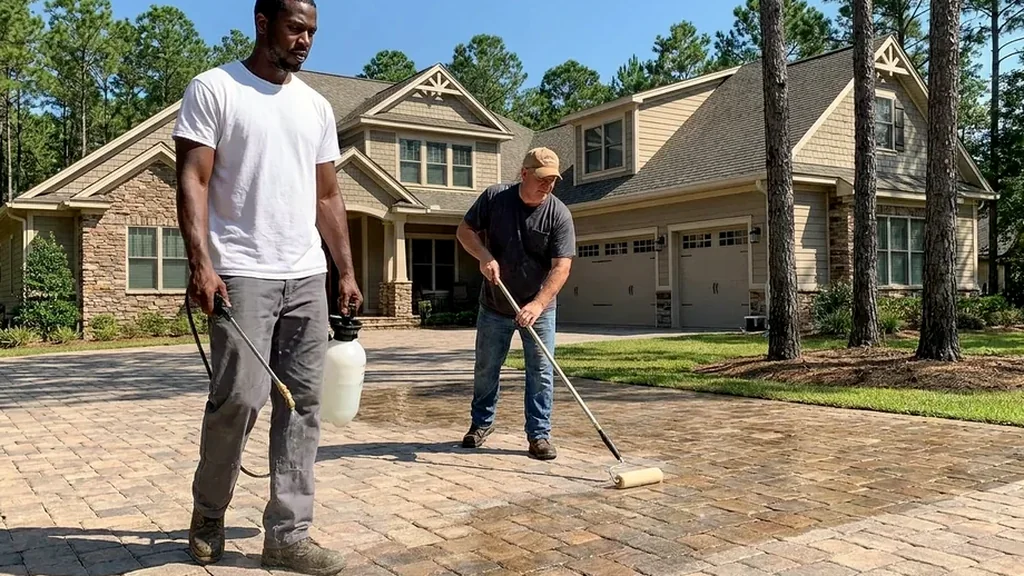
How does a paver sealing job work in Panama Park?
Walk the lot with the contractor
On the first visit the contractor traces how rain leaves your drive, finds sunken or root-lifted spots and checks how close river water comes. Photos help if you cannot be there. The contractor also tries to learn which product is already on the pavers, because that limits what can be applied next. A cross street or a nearby landmark, such as the city park on Buffalo Avenue, helps the contractor find the lot quickly.
Wash off what river and trees left
Silt, leaf tannin and green edges come off first. Where pavers meet brick, the crew guards the wall from spray. Rust and oil spots get their own treatment, since a coat laid over them would lock them in. Pavers near the river side of a lot are often the dirtiest after high water and take the longest to rinse.
Repair, then refill
Pavers that rose or sank are lifted and the base is rebuilt. Fresh sand is then swept into every joint until it sits full. Full joints keep rain from reaching the base, which is how washouts get stopped before they start.
Give the surface time to dry
A Surebond bulletin says most of its sealers need 24 hours of drying after cleaning or rain, and 24 dry hours after application. Near the Trout River that can stretch a schedule. A Jacksonville company says spring and fall often bring the steadiest weather, so the contractor may offer dates in those months.
Coat it and stay off
The contractor sprays sealer and then back-rolls it into the joints. One sealing company lists 2 to 4 hours before foot traffic and 24 hours before cars, so park on the street that day. A fresh coat is typically two to five years away, by company quotes.
Complete paver services in Panama Park
Think of a Panama Park job as five moves: look, repair, wash, sand and seal. A short driveway wraps up quickly, while a long one simply takes more hours. Sealer always goes last, so silt and leaf stain stay out from under it. Ask about your own timeline by calling (904) 966-4279.
Panama Park pavers live hard lives in different places. Driveways carry the weight, front walks meet roots and back patios sit in shade. A quote that lists each surface separately shows where the money goes. When you are ready, book your free estimate and name every area you want done.
Finish matters on a working driveway. A wet look makes color richer but shows wear in the lanes, and matte hides it better. If a truck or work van parks there daily, matte may be the calmer pick. Call (904) 966-4279 and talk it over.
Dates here bend around weather and water. May to September brings the hardest rain, and November through April runs drier. Ground close to the Trout River may stay wet after a storm, so ask for a flexible window. To set one, book your free estimate and say how near the water you are.
Questions to ask before you hire
- What do you do about pavers that have sunk or shifted along the edges?
- Will the sealed pool deck be slippery when wet, and is there a grip additive?
- How long should I keep the sprinklers off before and after the work?
- Can you seal the driveway now and come back for the pool deck later?
- How do you check that the pavers are dry before the sealer goes on?
- What happens if a summer storm rolls in halfway through the job?
- What kind of weather is too hot or too humid for sealing in Florida?
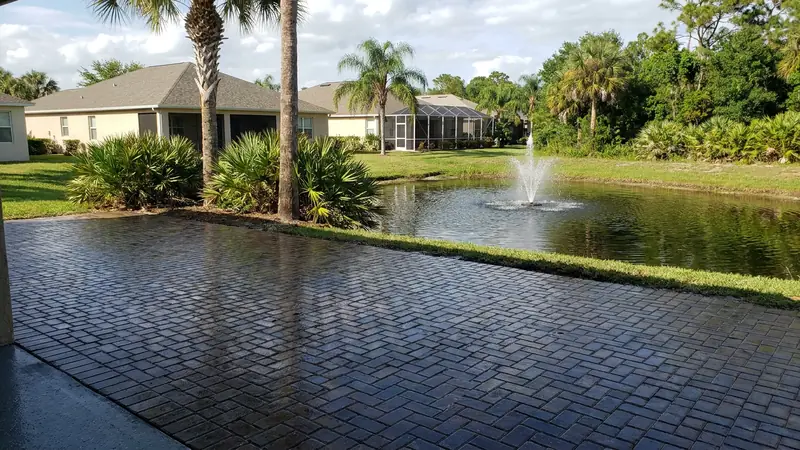
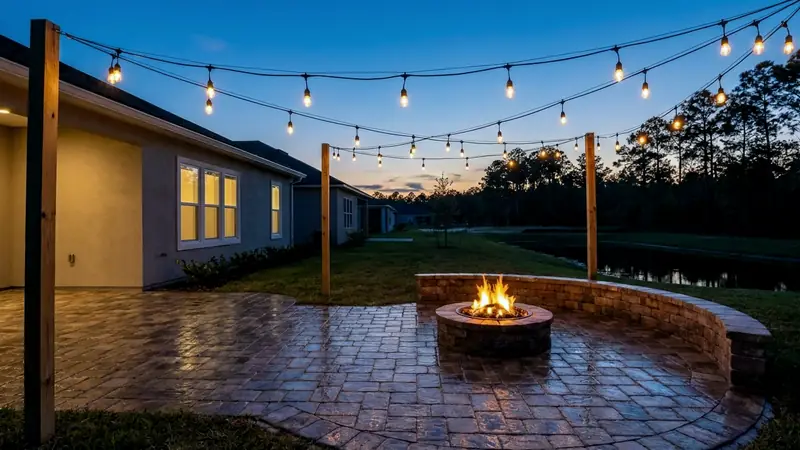
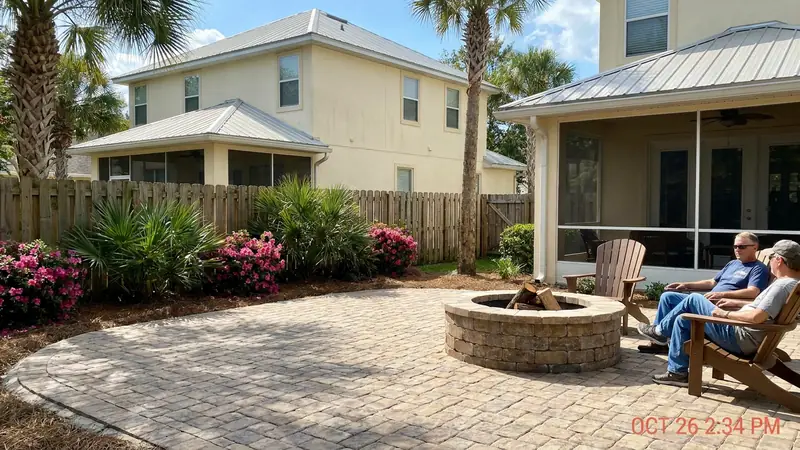
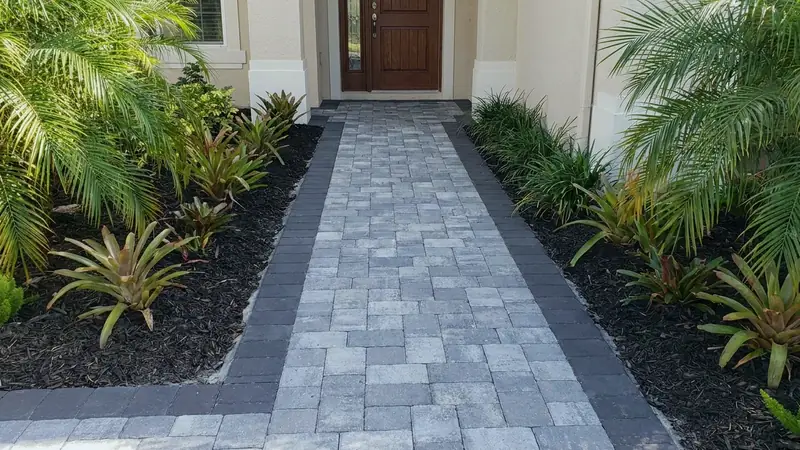
What do sealed pavers look like around Panama Park?
Why local matters in Panama Park
A contractor who works Panama Park will ask when your lot last took river water. Irma and Nicole both sent the Trout River into homes here, and low corners hold moisture long after. That history decides how long the pavers need to dry. To reach a contractor who plans for it, call (904) 966-4279.
Local knowledge also covers the streets themselves. Panama Park has older brick homes, post-war blocks along Main Street and newer rentals, so access and rules vary from house to house. A local contractor knows to ask who owns the pavers and who signs. If you manage a rental, book your free estimate and say so.
The weather matters in a place between two rivers. Moist air near the water keeps shaded corners damp, and summer storms arrive fast. A contractor who knows that watches the sky and rebooks without a fuss. Call (904) 966-4279 with your street and your preferred days, and ask about a flexible window.
How did Panama Park grow from a sawmill town into a neighborhood?
Charles Sibbald built East Florida's first steam-powered sawmill here in 1828, and the region's first brick kiln followed. The first plat came in 1879, a railroad depot opened in 1880, and George W. Clark began selling lots in 1910. If you live near the old rail line, book your free estimate.
The city annexed Panama Park in 1925, and Lola M. Culver Elementary opened in 1916 with two towers topped by terracotta eagles. Panama Park Pharmacy has stood on North Main Street since 1928, and the Trout River swing bridge dates to 1938. Close to any of these landmarks, book your free estimate and include your street.
Frequently Asked Questions
Is it good to seal pavers in Panama Park, Florida?
For most Panama Park drives and patios, yes. One Jacksonville company expects unsealed pavers to fade within three to five years and to lose joint sand to summer downpours. Sealing slows both, though it needs a new coat every few years. Pavers near the river that get silt and leaf stain gain the most from a surface that rinses clean.
What is the average cost to seal pavers in Panama Park?
Prices posted by companies here come to $1.75 to $3.25 per square foot for a clean, sand and seal job. A Panama Park quote moves with the area, the silt and shade growth and whether an old coat must come off. Request the square footage in writing. A failed coat adds a strip step, and a short driveway costs more per foot than a long one.
How long do paver sealers last in Panama Park?
Most company quotes land between two and five years for a coat. One Jacksonville company says film-forming sealers are redone every three to five years and penetrating ones last roughly five to seven. Beading water is the sign the coat still works. Heavy shade from old street trees and daily truck tires are reasons to expect the shorter end of that span.
Can I get my Panama Park pavers clean, sand and seal in one job?
Yes, that is how the work is normally priced. A contractor washes the pavers, refills the joints with sand and seals them once dry. Drying time can make it more than one day, especially near the river.
Can my Panama Park pavers be sealed after the Trout River floods?
Yes, when the silt is washed out and the pavers have dried. Flood silt has to be washed out of the joints, and lost sand has to be replaced. Sealing over silt or damp pavers locks the dirt in or leaves a cloudy finish.
What if my Panama Park driveway has sunk in places?
Those spots get reset first, because a Jacksonville company says sealing locks in whatever is there, and a sealed dip stays a dip. Heavy rain is a common cause, since storm water can erode the base under unsealed joints.
Can a landlord order paver sealing for a Panama Park rental?
Yes. A landlord or manager can request the estimate and approve the work. Tell the contractor who owns the property and who will be home, and share any lease rules on parking so the day goes smoothly. The estimate itself is free, and nobody is obliged to book after hearing the price.
Does brick on my Panama Park house need care near the pavers?
Yes. Cleaner and rinse water can discolor brick, so the contractor points runoff away from the walls and keeps spray low. Mention the brick when you call.
When should I schedule paver sealing near the Trout River?
Aim for a run of dry days. A Jacksonville company says spring and fall often have the steadiest weather. Rain is heaviest here from May to September, and low lots by the water can stay wet longer, so book a window and not a single day.
Where is Panama Park, and does a contractor serve it?
Look about four miles north of downtown Jacksonville for Panama Park, on the land between the Trout and St. Johns rivers. It was the city's northern gateway before I-95 opened, and North Main Street is its commercial spine, with Panama Park Pharmacy open there since 1928. Contractors who work the Northside work Panama Park, so you can request an estimate here.
Nearby areas we serve
Ready for a Free Estimate in Panama Park?
Call (904) 966-4279 and tell us about your pavers.
Free, no obligation