
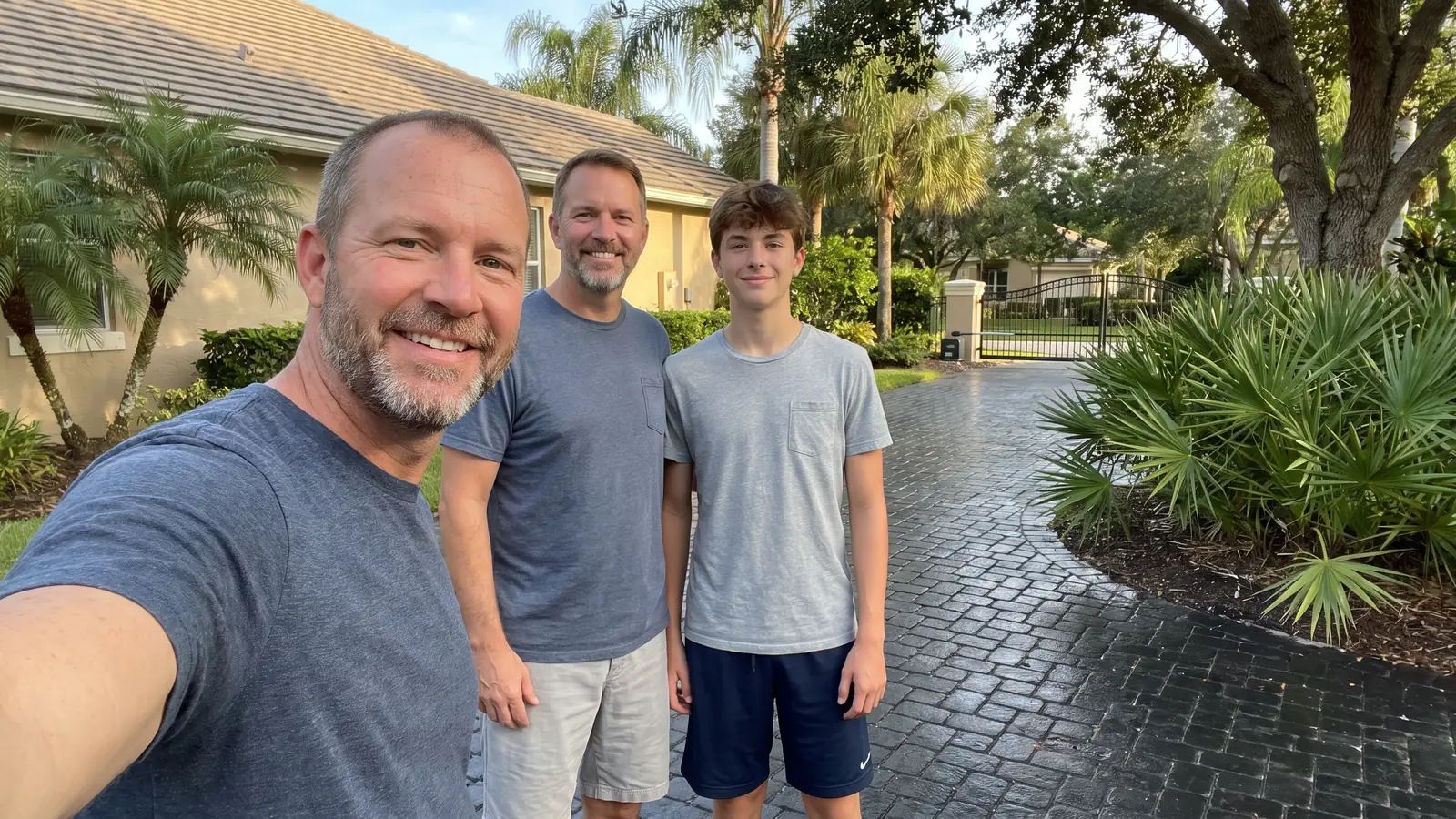
Paver sealing for Arlington homes
Paver Sealing in Arlington, FL
Arlington ranch homes from the 1950s often have long driveways, and a local contractor can seal yours; call (904) 966-4279.
- Brings out deeper paver color
- Fresh joint sand helps lock pavers in place
- Gives weeds less room to grow
- Makes the surface easier to keep clean
- Free estimate, no obligation
Request a Free Estimate
Free, no obligation.
Fast, careful paver sealing in Arlington
Paver sealing in Arlington starts with a free estimate, and you will hear back within 1 business day, usually much sooner. The contractor washes the pavers, sets new sand in the joints and puts a protective coat over the top. A 1950s ranch in River Forest and a newer home near Jacksonville University both qualify, so book your free estimate.
Picture a long driveway gone gray and chalky, with weeds along the edges and sand washed into the gutter. After a wash, new joint sand and a fresh coat, the same pavers read as one clean color again. If you would rather talk it through first, call (904) 966-4279 and say which streets you are near.
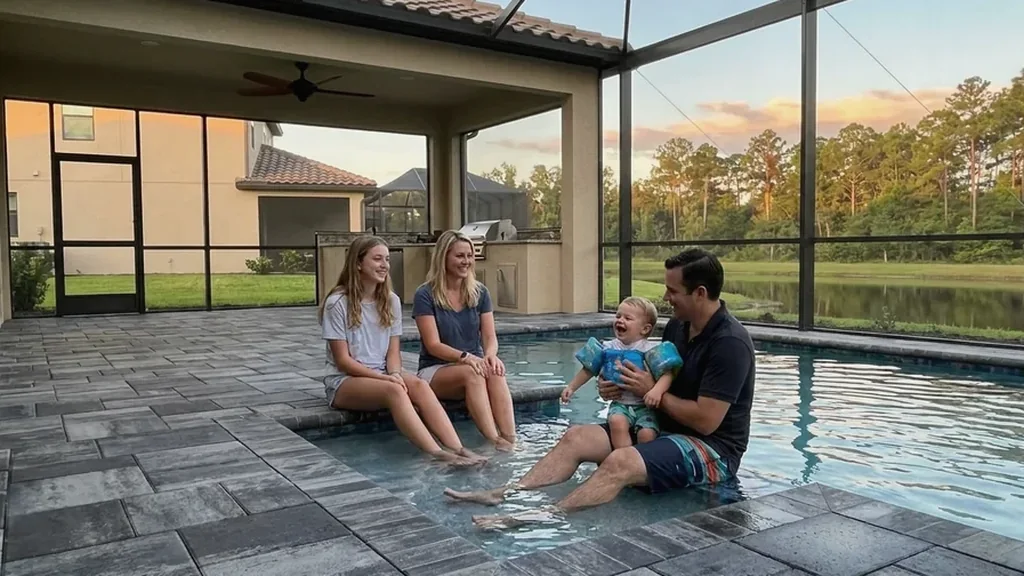
Why hire a local paver sealing contractor in Arlington?
Arlington mixes high ground, creeks, old oaks and a great many homes from the 1950s and 1960s, and each of those changes how a paver job goes. A local contractor knows that mix, so to hear how it fits your lot, call (904) 966-4279.
A free look at your drive
The contractor measures your Arlington pavers and gives you a price before anything is agreed. Saying yes is never required.
A price you can check
Local companies publish $1.75 to $3.25 per square foot to clean, sand and seal. Hold any Arlington quote up against it.
A finish to match the house
A matte coat keeps a brick ranch looking natural. A wet look deepens color but shows scuffs sooner on a busy drive.
You make the calls
You pick the date and the finish. Every Arlington estimate gets a reply within 1 business day, usually much sooner.
Get Your Free Estimate in Arlington
Tell us about your pavers in Arlington.
Free, no obligation
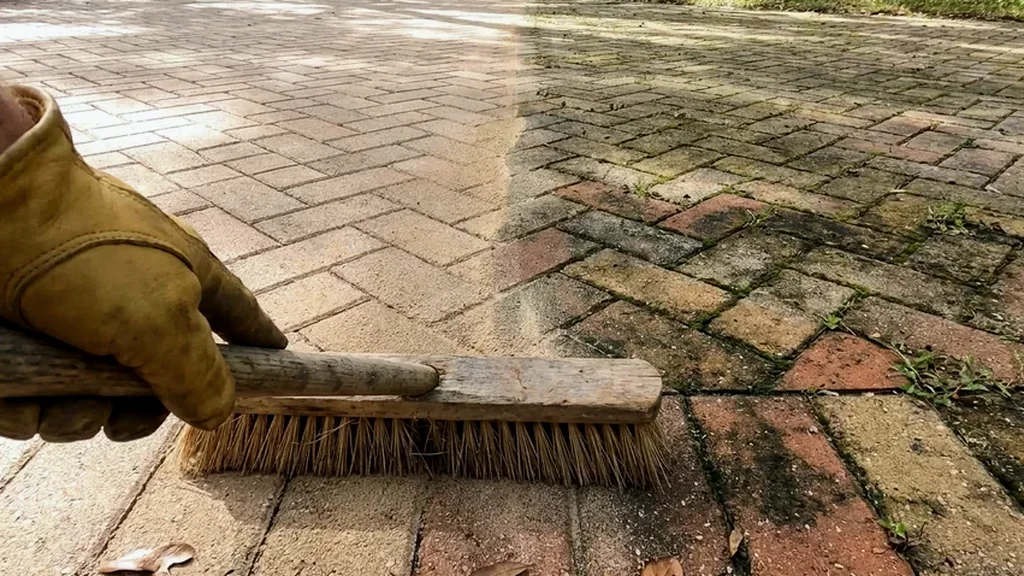
What paver problems show up most in Arlington?
Brown oak stains on long driveways
A cleaning company that works the First Coast says Arlington drives and walks under live oaks pick up brown stains from oak tannin. Tree Hill Nature Center on Lone Star Road keeps an oak described as 300 years old, so deep canopy is part of this area, and Jacksonville University sits on 260 acres with the river nearby. On a long ranch driveway, the stain often runs in a band where the branches hang lowest. Sealer would lock a stain in place, which means the stain gets treated before any coat goes on. Ask to see the spot in daylight after the wash, so you know what is gone and what is left.
Joint sand that leaves with the rain
The ground under Arlington is sandy, and sand drains fast but also moves. The USDA describes the Ortega soil series, first mapped in Duval County, as deep sandy soil on marine terraces. Heavy summer rain pulls sand out of unsealed joints, and weeds then root in the gaps. Those weeds are a sign the joints need sand, not only a quick pull. Fresh sand locked in by sealer leaves them far less room to grow, and it also stops pavers from shifting as the joints loosen.
Damp spots near the creeks
Pottsburg Creek is fed mainly by rainwater and storm drains, and its level swings a lot. In July 2022 homeowners on Woolery Drive in Arlington Hills told News4JAX about street flooding that had lasted a year. Pavers that stay wet grow green film, and sealer needs a dry surface, so a low yard may add days to the schedule. The contractor will ask how fast water leaves your driveway after a storm, and where it pools near the garage.
Chalky color in full sun
A Jacksonville paver company lists faded or chalky color in direct sun as a sign it is time to reseal. Arlington's wide, open drives in front of 1950s ranch homes catch that sun all afternoon. A coat that has gone flat no longer protects the color, which means the pavers keep fading until it is renewed. Color that has gone flat usually looks better right after a wash, and better again after a new coat. Wide, open pavers with no tree cover tend to show it first.
Rust marks from sprinkler water
Extension specialists at the University of Florida link orange stains from sprinklers to iron in well water. The water district allows lawn watering only two days a week in summer, so the spray hits the same strip of pavers on the same days. Rust lines need treatment before sealing, since a coat would hold them in place. Turning the sprinkler heads away from the pavers helps keep new marks from forming, and the contractor can point out which heads are the likely cause.
Does paver sealing work the same in Lake Lucina and Woodland Acres?
Mostly yes, because both areas grew up in the mid-century years on sandy ground, though the lots differ. Lake Lucina homes were built from 1951 to 1962 around the forty acres William Cesery bought near Cesery Park. Woodland Acres, platted in 1910 and mostly built from 1940 to 1960, has hilly ground along Pottsburg, Strawberry and Silversmith creeks. Name your area when you book your free estimate, and the contractor can plan for it.
River Forest is mostly ranch homes of about 800 to 1,600 square feet, and Arlingwood is mostly brick ranches with a median build year of 1961. Smaller homes tend to mean smaller driveways and patios, and a small patio can run into a company's minimum job size. Call (904) 966-4279 and tell the contractor how big your pavers are, so the quote starts from a real number.
Rules differ by street, and ten of the current Lake Lucina listings say there is no HOA. Where an association exists, Florida Statute 720.3035 lets it review changes only as far as its declaration or published guidelines say. Read yours for finish and color limits, then book your free estimate.
What does paver sealing cost in Arlington?
Published prices for the full clean, sand and seal sit between $1.75 and $3.25 per square foot. Where an Arlington driveway lands in that range depends on shade film, lost joint sand and any old sealer that must come off first. Stripping and resealing costs more when an earlier coat has failed. For a figure that fits your pavers, book your free estimate.
Size matters too. A long ranch-house drive with a walkway and a back patio adds up, while a small patio can run into a company's minimum job size. Locked gates, tight side yards and nearby plants add prep time as well, so call (904) 966-4279, describe your layout and ask for the total square footage in writing.
| Paved area | Typical example | Clean, sand and seal |
|---|---|---|
| 300 sq ft | Small patio or walkway | $525 to $975 |
| 600 sq ft | Two car driveway | $1,050 to $1,950 |
| 1,000 sq ft | Large driveway or pool deck | $1,750 to $3,250 |
| 1,500 sq ft | Driveway plus pool deck | $2,625 to $4,875 |
Math based on the $1.75 to $3.25 per square foot that Northeast Florida paver companies published as of November 2026. Your contractor sets the actual price after seeing the surface. Repairs, leveling and stripping failed sealer are usually extra.
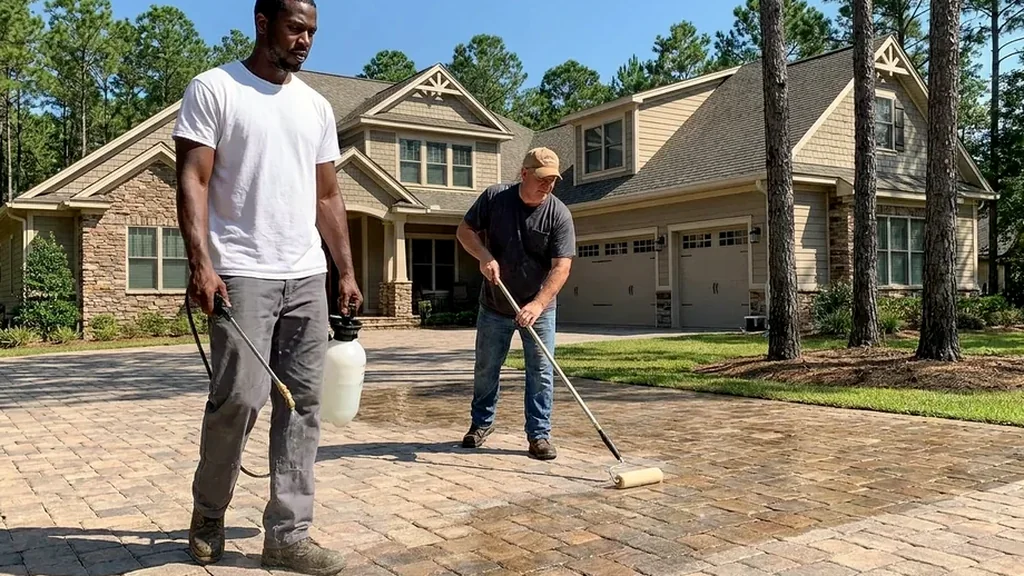
How does a paver sealing job work in Arlington?
Walk the drive and find the old coat
The contractor looks at how your Arlington pavers drain and where oak shade holds moisture. Sunken or lifted spots are reset before sealing, since a coat only preserves a dip. A past coat matters, since water-based sealer cannot go over solvent-based sealer. Mention any flooding you have seen on your lot, since that changes the cleaning plan and the drying time.
Wash off oak stain and creek-country grime
Cleaning comes next, aimed at green film, tannin and any rust from sprinkler water. The contractor works gently near the garage door and fence line. Washing can pull out joint sand, so the surface is left to dry fully before anything else happens. In winter that can take a full day, and in humid summer weather it can take longer. Sealer over a damp surface can turn cloudy, which is why the contractor never rushes this step. A shaded walkway can take longer to dry than the sunny drive beside it.
Refill the joints with sand
Because washing removes joint sand, the contractor puts it back before sealing. On Arlington's sandy ground, empty joints let soil settle in and give weeds a place to start. The joints are filled and swept clean so the sealer can lock the sand in place. This step is what keeps the weeds from coming back. Skipping it is how a freshly sealed driveway ends up with gaps again.
Apply the sealer in even coats
The contractor sprays the sealer and then back-rolls it, which works it into the joints and keeps the coat even. Matte or wet look is your call, and you can ask to see both on a sample. Edges by the garage, the walkway and any pool deck are done with care, and fences, plants and the house wall are covered first. Thin, even coats help avoid a white haze. A coat laid on too thick is the usual cause of that cloudy look.
Keep off while it cures
Foot traffic is usually fine within a few hours, and cars stay off for about a day, depending on the sealer and the weather. Park on the street or in the garage the night before if you can. The contractor can tell you the exact wait for your product, and a sprinkler timer set to skip those days helps. After that, the drive is ready for normal use, and the color should read as one even tone from the street to the garage.
Complete paver services in Arlington
A sealing job follows a set order. The contractor washes the surface, lets it dry, tops up the joint sand and then applies sealer, often by spraying and back-rolling it. A long Arlington driveway is worked in sections so each pass stays even, and a walkway or patio follows the same order. To plan one for your place, book your free estimate.
Each surface wears in its own way. Driveways wear hardest, since turning tires loosen sand in the same spots. Walkways under oak limbs stay damp and grow a green film, while pool decks add chlorine splash and bare feet. Tell the contractor which of these you have when you call (904) 966-4279.
Sealer comes water-based or solvent-based, and a water-based coat cannot go over a solvent-based one. A matte finish keeps the natural look, while a wet look deepens color and shows scuffs sooner. Ask what is on your pavers now so the right product is chosen, and if nobody knows, the contractor can test a corner first. To start, book your free estimate.
Sealer needs a dry surface, so the contractor watches the forecast. Jacksonville gets about 52 inches of rain a year, mostly from May to September, and November through April is the driest stretch. That makes the cooler months easy to schedule in Arlington. Summer afternoon storms can move a date, so ask about open dates when you call (904) 966-4279.
Questions to ask before you hire
- Do you replace joint sand that has washed out, or only add a little on the surface?
- Does the price include the pressure washing, or is that a separate line?
- What do you do about pavers that have sunk or shifted along the edges?
- Is your quote one price for the job or a price per square foot?
- Will the sealer leave a glossy wet look or a natural matte one, and can I see a sample first?
- How do you protect my plants, my landscape lights and the base of the house?
- How long until cars can park on the driveway again?
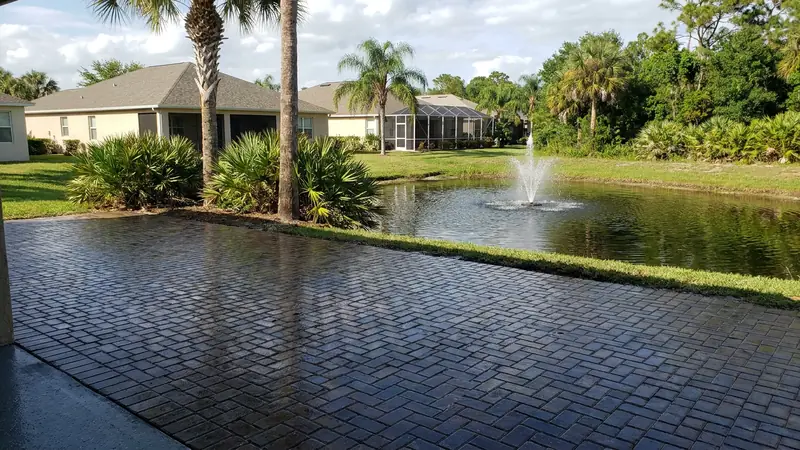
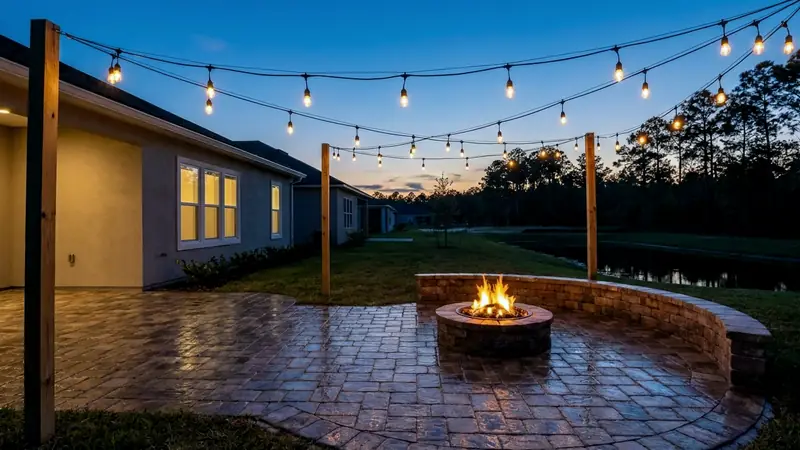
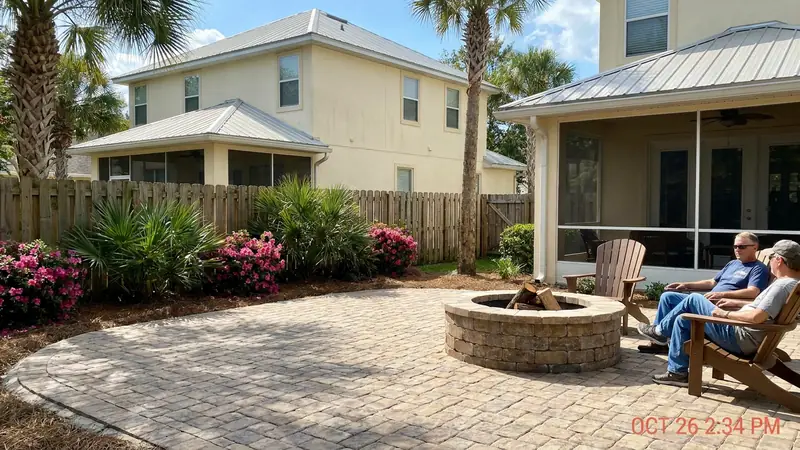
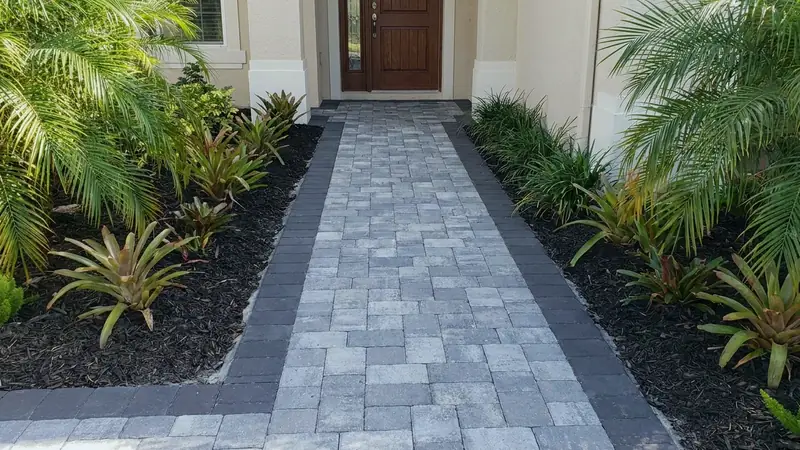
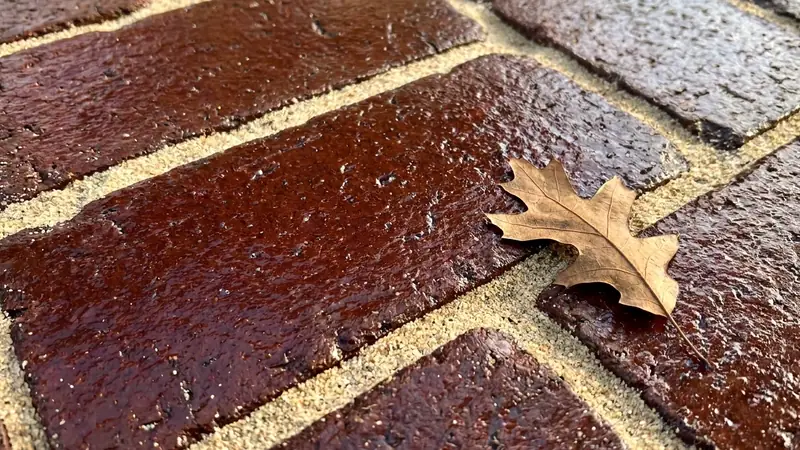
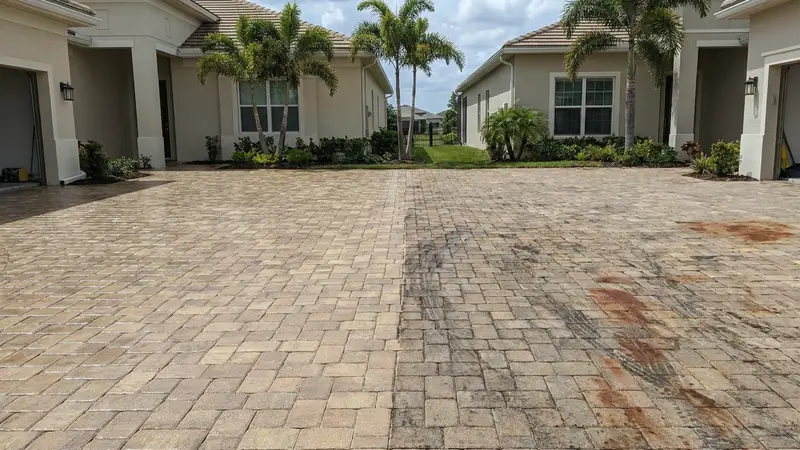
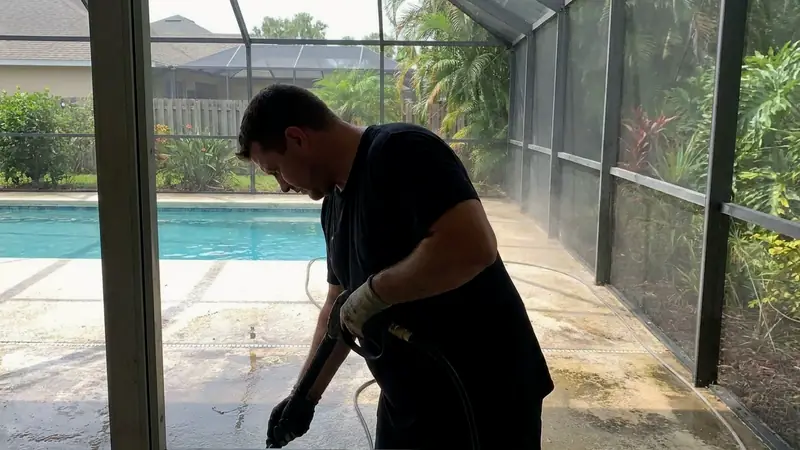
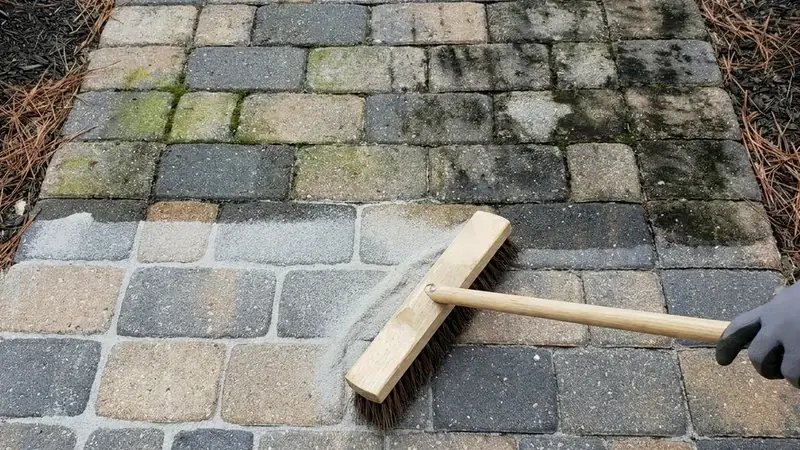
What do sealed pavers look like around Arlington?
Why local matters in Arlington
Arlington has high ground that drains well, and it also has low spots by the creeks that hold water. A contractor who works here learns which streets dry fast and which stay damp, which changes the schedule because sealer cannot go on a wet surface. To plan around your yard, book your free estimate.
Many Arlington homes are ranch houses from the 1950s and 1960s, with long drives, fences and pool decks. Those layouts mean tight gates, side yards and landscaping to protect. A local contractor expects that and covers plants and lights near the pavers first, so call (904) 966-4279 and ask how your layout will be handled.
Arlington covers about 64 square miles, so conditions change from the river bluffs to the creek flats. A contractor who knows the area can tell you what to expect for your own address before the work starts. The estimate is free, with no obligation. When you are ready, book your free estimate.
Does it help to hire someone who knows Arlington's history?
Yes, because growth after the Mathews Bridge opened in 1953 shaped the lots you see today. Arlington grew faster than any other part of Jacksonville for two decades. Terry Parker began buying land around 1943, and Terry Parker High School sits on thirty acres he gave in 1955. If your ranch home is on one of those streets, book your free estimate.
Jacksonville University bought its Arlington land in 1947 and opened its first building in 1950. Atlantic Boulevard, finished in 1910, was Florida's first modern improved highway, and Norman Studios on Arlington Road dates to 1922. Tree Hill, Cesery Park and the river bluffs complete the picture. Anyone near these Arlington places can call (904) 966-4279 and name a street.
Frequently Asked Questions
Is it good to seal pavers in Arlington?
Yes, in most cases. Sealer helps hold joint sand in place, slows fading and keeps oil and dirt on top of the surface. Arlington's sandy ground, summer storms and oak shade are the reasons it pays off here.
How long do paver sealers last in Arlington?
Plan on two to five years between coats, the span companies commonly quote for Jacksonville-area pavers. A drive in full sun or under heavy oak shade may need a coat sooner. If water soaks in instead of beading, it is time to ask for a look.
How much does it cost to clean and seal pavers in Arlington?
Published prices for the full clean, sand and seal sit between $1.75 and $3.25 per square foot. Shade film, lost sand and old sealer move an Arlington job within that range. Ask for the total square footage in the quote so you can compare it with the published range, and ask what is included in the price.
Why is paver sealing so expensive in Arlington?
Prep takes most of the time, and the sealer is the smaller part of the work. A Jacksonville company reports roughly two to three hours of prep for each hour it spends sealing. Cleaning, drying and refilling joints take time, and small jobs cost more per square foot.
Will sealing stop oak stains on my Arlington driveway?
It helps with the next season. A cleaning company that serves the area says sealed pavers keep tannin from locking in. Existing stains still need treatment first, since sealer would hold them in place. Trimming low branches over the drive also helps cut the staining.
Do I need HOA approval to seal pavers in Arlington?
It depends on your neighborhood. Florida Statute 720.3035 lets an association review changes only as far as its declaration or published guidelines say. Many Lake Lucina listings state there is no HOA, so check your own papers.
Can old sealer be covered with a new coat?
Not always. A water-based sealer cannot go over a solvent-based sealer, so the contractor has to find out what is on the pavers now. Failed sealer that is peeling or hazy may need stripping first, which raises the price. Ask the contractor to point out any patchy areas on the walk-through.
Will sealing fix sunken pavers on my Arlington driveway?
No, sunken or lifted pavers need to be reset before sealer goes on. A coat only preserves a dip, so the low spots stay. Point them out at the first visit and ask how they will be repaired and what that adds to the quote.
How long do I stay off my Arlington pavers after sealing?
You can usually walk on the surface within a few hours, while cars wait about a day. The exact wait depends on the product and the weather. The contractor will give you the time for your driveway, so you can plan where to park.
Nearby areas we serve
Ready for a Free Estimate in Arlington?
Call (904) 966-4279 and tell us about your pavers.
Free, no obligation