
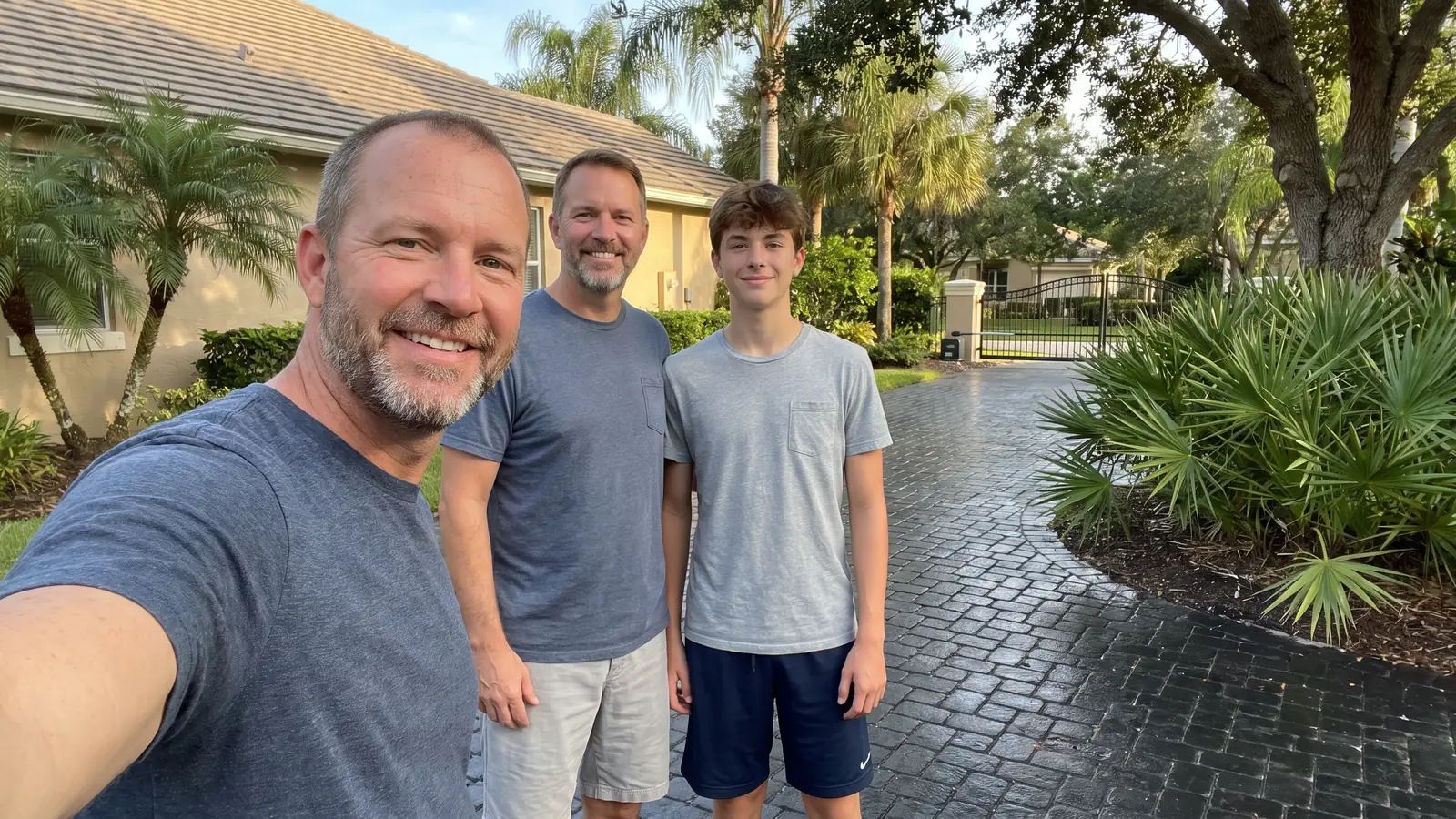
Paver sealing for Lakeside homes
Paver Sealing in Lakeside, FL
Lakeside has 9,616 single-family homes, and many drives are due a look; call (904) 966-4279 for a free sealing estimate.
- Brings out deeper paver color
- Fresh joint sand helps lock pavers in place
- Gives weeds less room to grow
- Makes the surface easier to keep clean
- Free estimate, no obligation
Request a Free Estimate
Free, no obligation.
Fast, careful paver sealing in Lakeside
Need paver sealing in Lakeside? A local contractor will clean, re-sand and seal your driveway, walkway or pool deck, and the estimate is free. Within 1 business day you get a reply, and it often arrives much sooner. When you book your free estimate, tell the contractor which street you are on.
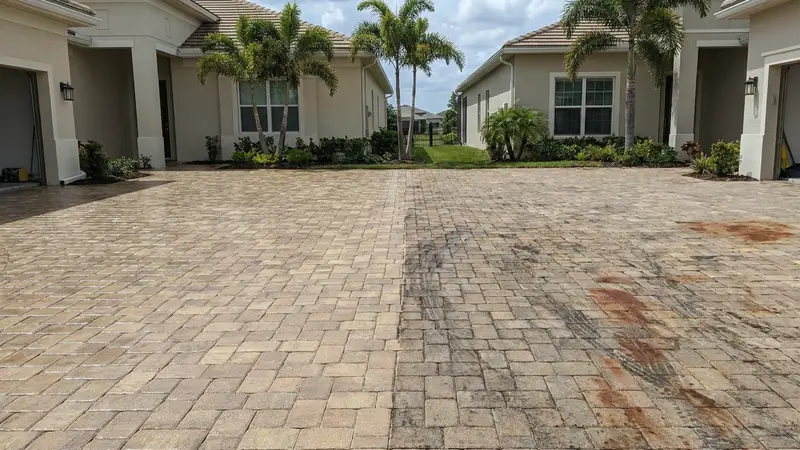
Look at the drive you pull into every day. Maybe the color has gone chalky, the joints are bare, and a green stripe runs along the edge by the garage. After a wash, new sand and a fresh coat, it reads as one clean surface again. Call (904) 966-4279 if you would like to describe it out loud first.
Why hire a local paver sealing contractor in Lakeside?
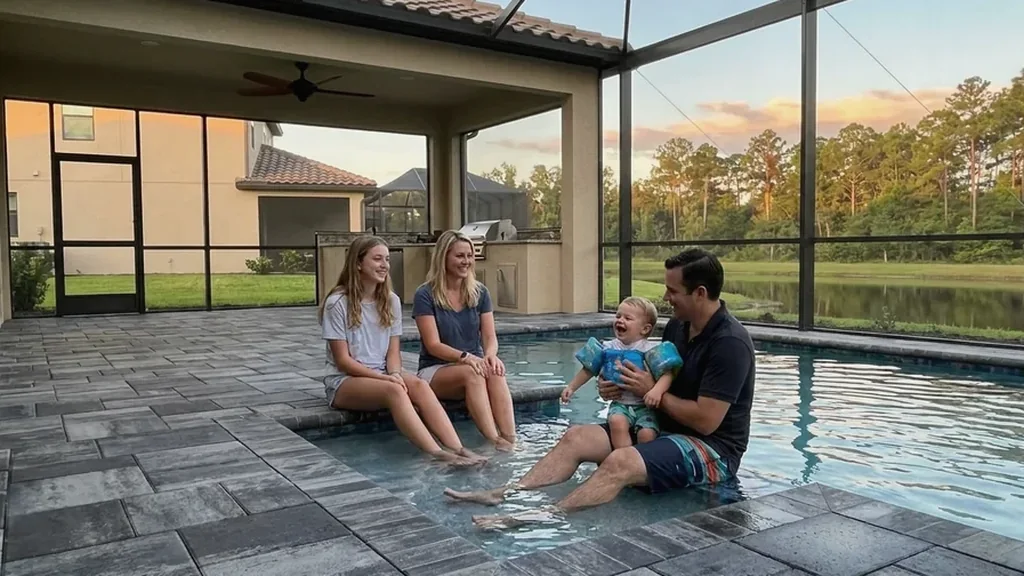
Most Lakeside homes were built from the 1970s through the 1990s, so plenty of pavers have been sealed once, twice or never. A local contractor can sort out which, so call (904) 966-4279 and say how old your house is.
A walk around the lot
The contractor tours your Lakeside driveway and patio, then quotes a price. The visit costs nothing.
A yardstick for bids
Regional companies post $1.75 to $3.25 per square foot for clean, sand and seal. Measure each Lakeside bid against that span.
Matte or glossy, your pick
Matte reads natural on a ranch front, while a glossy wet look deepens color but shows scuffs earlier where cars turn.
No pressure to say yes
You choose the day, and you decide whether to go ahead. A Lakeside estimate carries no obligation.
Get Your Free Estimate in Lakeside
Tell us about your pavers in Lakeside.
Free, no obligation
What paver problems show up most in Lakeside?
Chalky color on older drives
Lakeside is mostly 1970s to 1990s housing, with about 84 percent of the homes in Lakeside West built between 1970 and 1999. A paver drive added to a house of that age has seen decades of sun, rain and tires. Unsealed color fades and turns chalky. A new coat brings back depth, but the surface needs a good wash first so the color is not sealed in dull. Ask for a small test patch if you are unsure how the finish will look in your light. A drive that old may also have joints the sand left long ago, which the contractor checks at the same visit. Doctors Lake Estates, a nearby community, lists homes built from 1960 to 2026 with a median build year of 1981, so many of its pavers have had decades of sun. Lakeside West, a neighborhood of mostly three and four bedroom homes, is the sort of area where one drive often looks much like the next.
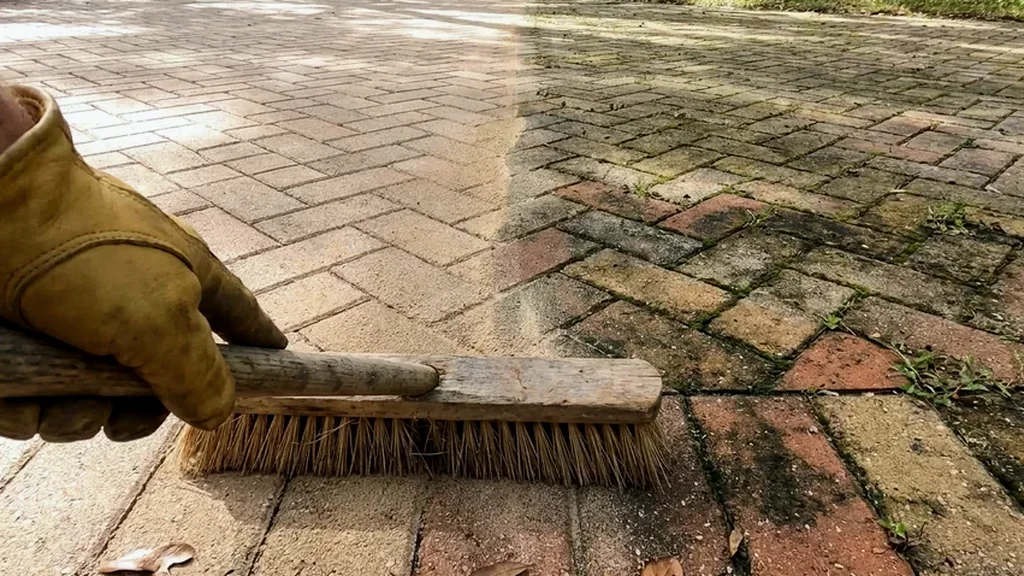
Green stripes along damp edges
Algae thrive in wet conditions and grow faster in shade with poor airflow, according to the Royal Horticultural Society. Lakeside sits beside Doctors Lake, so air stays humid. Look along the garage wall, the north side of the house and any spot a downspout drains across. Those damp edges go green first, and sealer cannot go over them until they are clean. A damp, shaded side can need a longer dry time than the sunny front, which the contractor plans for ahead of the coat. The contractor treats each side of the house as its own drying zone. The basin around Doctors Lake covers about 23 square miles of former farm and forest land, now housing and shops, the St. Johns River Water Management District says. Sealing does not stop algae from landing, but a clean, coated surface gives it less to hold on to.
Reclaimed water marks
Some Lakeside yards run on reclaimed water, a service Clay County Utility Authority provides to 13,204 residential customers across the county. One Northeast Florida paver company counts reclaimed-irrigation staining among the wear on driveways. Rings or streaks along the paver edge usually point to a sprinkler head throwing water the wrong way. Mention them early, because marks must be treated before sealing, and a coat would lock them in.
Joint sand lost on sandy ground
A county horticulture agent describes Clay County sites as generally sandy, dry and low in organic matter. Sand drains fast, and summer storms carry joint sand away. Empty joints let pavers shift and let weeds in. The contractor refills the joints after washing, and a coat of sealer helps hold the new sand in place. Fresh sand in the joints is one of the quickest ways to see what the work has done. Lakeside's single-family count rose from 7,177 in 1990 to 9,616 in the 2016 to 2020 survey, so neighbors often share the same age of pavers and the same wear.
Low lots near Doctors Lake
Hurricane Irma's storm surge flooded homes along Doctors Lake Drive and Dogwood Lane, and Nicole brought water to the Doctors Lake boat ramp in 2022. Pavers on low ground may carry silt in the joints after a surge. Sealing over silt is not worth the money, so the contractor cleans it out first. Tell them if your lot has taken water before. That history changes how much washing the job needs and how long the surface should dry. In that same Doctors Lake Estates sample, median ground elevation is 16 feet, and 1 of 10 homes sat in a FEMA special flood hazard zone.
Do Lakeside's older subdivisions need a different sealing plan?
Often yes, because older subdivisions tend to have older pavers and older coats. Paces Ferry dates to the early 1970s and Oakdale to 1973 and 1974, while Seven Oaks and other streets came later. A contractor needs to know which decade your house is from. When you book your free estimate, name your subdivision.
The median home in one Lakeside community was built around 1974 and has about 1,774 square feet of living area. One closed listing in Fox Ridge describes a 1981 ranch home with an in-ground saltwater pool and a large deck. Pool decks near salt systems get different care than plain driveways, so call (904) 966-4279 and mention yours.
Some Lakeside streets sit inside an HOA, such as Foxwood, which a real estate page calls well established. Florida law limits an HOA to the powers in its documents, so check them before choosing a glossy finish. The contractor can then match your choice to the rules. When you have the paperwork in hand, book your free estimate and ask for a sample of the finish you want.
What does paver sealing cost in Lakeside?
The range companies in the region post is $1.75 to $3.25 per square foot for clean, sand and seal. Your Lakeside price moves with the shape of the job: how green the edges are, how much sand has gone, and whether an old coat has to come off. To get a number for your Lakeside square footage, book your free estimate.
A Lakeside patio the size of a bedroom still needs a full wash and new sand, so the per-foot price climbs on small jobs. Add a pool deck and lanai to the drive and the area, and the total, grow. Published price lists put strip-and-reseal higher than a recoat. Call (904) 966-4279 to learn which of these applies to your lot.
| Paved area | Typical example | Clean, sand and seal |
|---|---|---|
| 300 sq ft | Small patio or walkway | $525 to $975 |
| 600 sq ft | Two car driveway | $1,050 to $1,950 |
| 1,000 sq ft | Large driveway or pool deck | $1,750 to $3,250 |
| 1,500 sq ft | Driveway plus pool deck | $2,625 to $4,875 |
Math based on the $1.75 to $3.25 per square foot that Northeast Florida paver companies published as of November 2026. Your contractor sets the actual price after seeing the surface. Repairs, leveling and stripping failed sealer are usually extra.
How does a paver sealing job work in Lakeside?
Check what is already on the pavers
Start with a look at what is on the pavers now. A cloudy patch or a peeling edge hints at a past product, and a past product limits the next one. Flag any low spot or lifted corner for repair before sealing, because a coat locks in whatever it covers. Ask a past owner or check the garage for a can or a receipt, since a product name can save a test patch. Notes written down now make the next recoat easier to plan.
Wash the surface clean
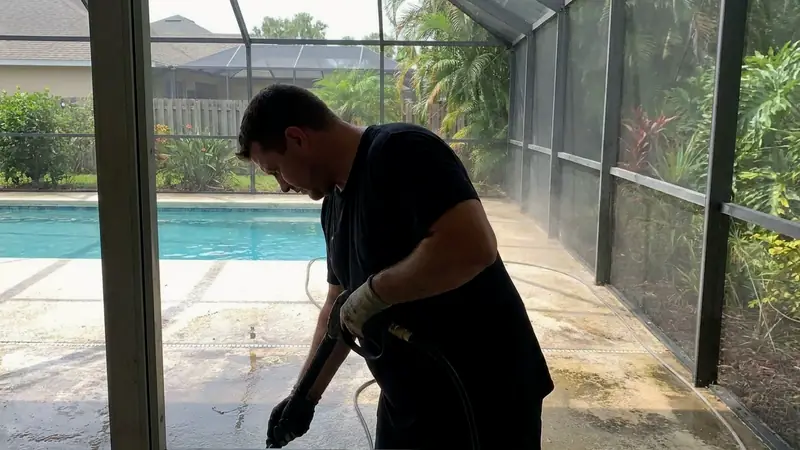
Cleaning removes the green film, tire marks and any dirt left behind by storm water. Reclaimed irrigation rings and rust streaks get a closer look at this stage. The wash also pulls out the joint sand, so the next step is not optional. Expect the contractor to work around the pool, the screen and any plants near the edge. Where the pavers meet the house, rinse water is kept off siding and screens as far as the layout allows. Pool edges and screen frames are rinsed with care as well, since they sit close to the pavers in most Lakeside backyards. A pool deck beside a saltwater system, like the one in a Fox Ridge listing, gets a closer look at the edge for residue.
Put fresh sand in the joints
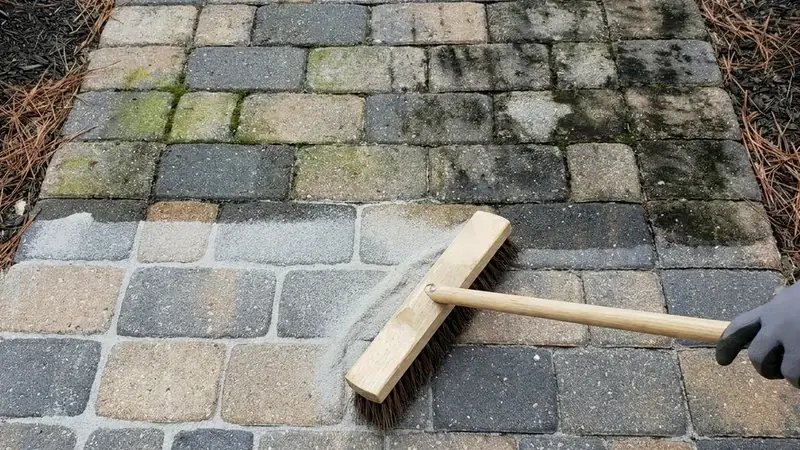
Joints get new sand, swept level. After a wet summer, bare joints are common here, and full ones keep pavers from shifting and leave weeds little room. Extra sand is swept off so none sits under the coat. If the joints were bare for a long time, this step can take longer than the wash did.
Wait for the surface to dry
Lakeside's air stays damp because Doctors Lake lies so close, so shaded corners can hold water long after the front drive has dried. The contractor tests the shadiest spot before starting and moves the day if it is still wet. A storm in the forecast moves it too. Dry time is a good moment to clear cars, chairs and planters off the surface, and each side of the house counts as its own drying zone.
Seal and keep traffic off
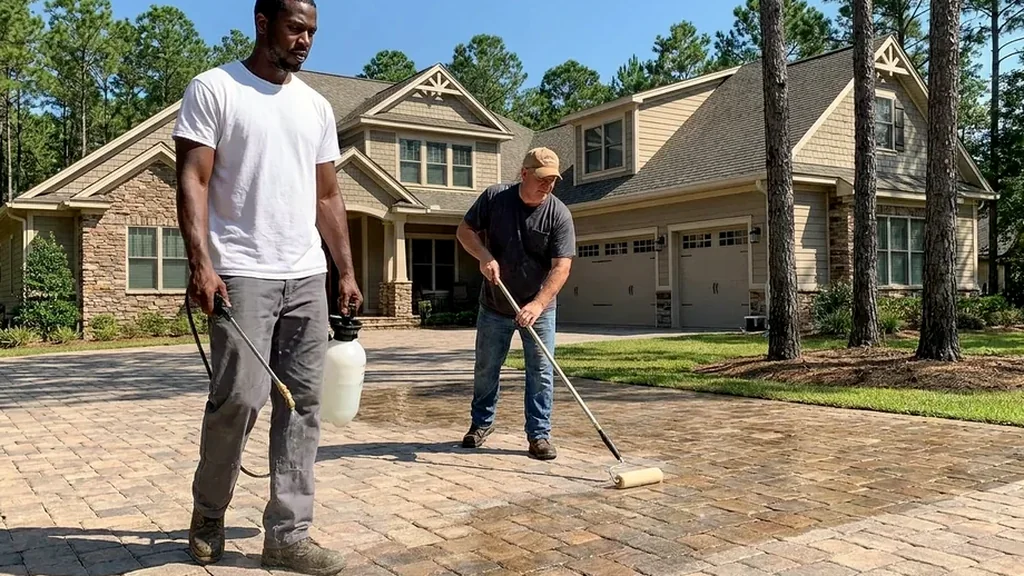
Spray goes on first and a roller follows to work the coat in. One Jacksonville company puts foot traffic at a few hours and cars at about a day off the drive, so park on the street that night. Matte hides wear better than a wet look. Quotes commonly allow two to five years before the next coat, and full sun and heavy tires push toward the short end. Doctors Lake Estates and other streets close to the water may reach the end of a coat sooner than streets farther inland, since damp air keeps working on the surface.
Complete paver services in Lakeside
Lakeside jobs follow a plain order. The contractor washes first, refills the joints second, waits for a dry surface third, and seals last. Each step sets up the next, and skipping one hurts the finish. Call (904) 966-4279 to learn how long this takes on your lot.
Driveways here carry tires and runoff from the street. Pool decks beside a saltwater system stay splashed and damp, and penetrating sealers are a common choice there, a Jacksonville cost guide says, because they keep grip. Walks beside downspouts turn green early. When you book your free estimate, list every surface you want done.
A sealer is either water-based or solvent-based, and what is already on your pavers decides which one can follow. Film-forming types add shine, while penetrating types soak in and keep the look. For a 1970s or 1980s ranch front, matte is a safe starting point. Call (904) 966-4279 and ask for a sample.
Summer rain in Clay County can shuffle a Lakeside schedule. The goal is a clear sky and a dry surface on the day. Afterward, cars stay off for about a day, so decide where to park. To choose a week that fits you, book your free estimate.
Questions to ask before you hire
- Does the price include the pressure washing, or is that a separate line?
- What kind of weather is too hot or too humid for sealing in Florida?
- How do you check that the pavers are dry before the sealer goes on?
- How long should I keep the sprinklers off before and after the work?
- Can you seal the driveway now and come back for the pool deck later?
- Will the sealed pool deck be slippery when wet, and is there a grip additive?
- How long until cars can park on the driveway again?
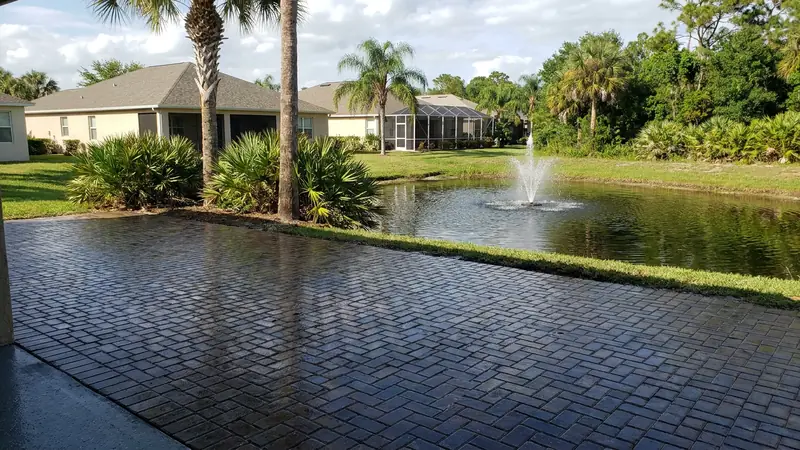
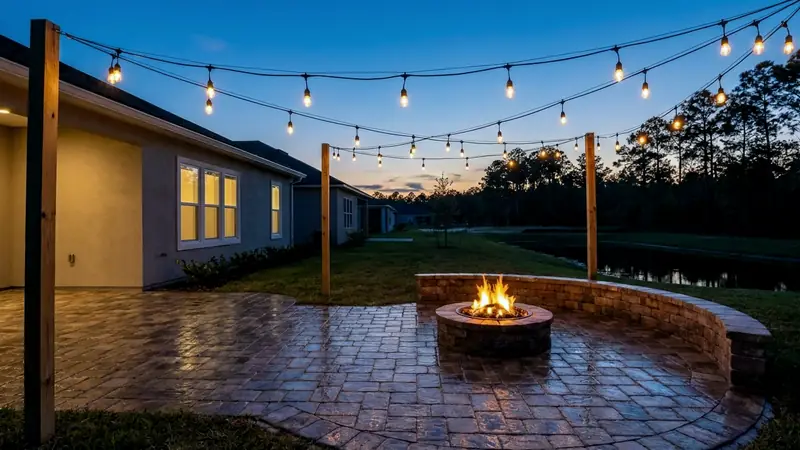
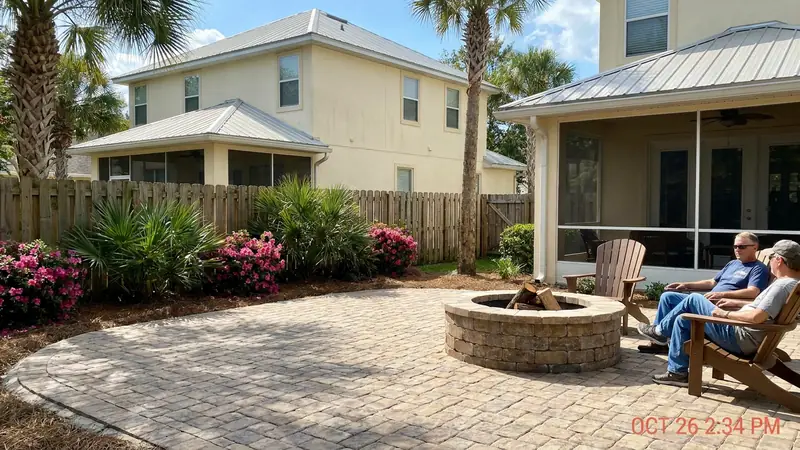
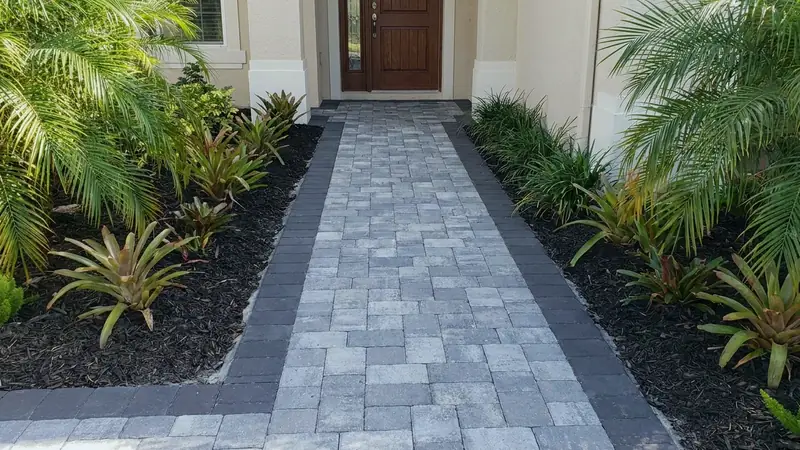
What do sealed pavers look like around Lakeside?
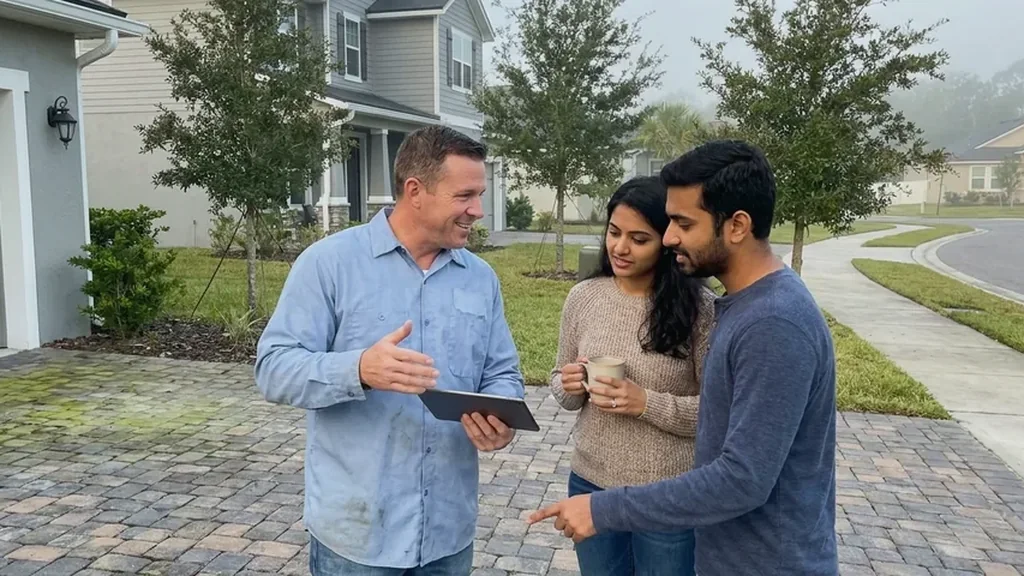
Why local matters in Lakeside
Lakeside homes mostly date from the 1970s through the 1990s, so a drive has likely been sealed at least once, by someone, with something. A contractor who works here asks who and what before choosing a product. Call (904) 966-4279 to talk with a contractor who opens with that question.
Doctors Lake is brackish, covers about 13 square miles, and lies east of Lakeside, so damp air is part of daily life. Irma's storm surge reached homes on Doctors Lake Drive. If your lot sits low, you can book your free estimate and ask how wet ground changes the schedule.
Reclaimed water is another local detail. Clay County Utility Authority serves 13,204 residential customers with reclaimed irrigation water. A contractor who knows that will look for sprinkler marks on your pavers. Call (904) 966-4279 and say whether your yard runs on reclaimed water.
What is Lakeside like for a homeowner with pavers?
Lakeside is a Clay County community of 31,275 people, set along the west side of Doctors Lake near Orange Park. It covers 15.65 square miles, and 2.19 of those are water. It shares the 32065 and 32073 ZIP codes with the Orange Park mailing area. If your drive is in that area, book your free estimate.
St. Johns River State College has its Orange Park campus on College Drive in Lakeside, and the Thrasher-Horne Center for the Arts opened there in 2004. Lakeside lies south of Bellair-Meadowbrook Terrace, beyond Kingsley Avenue. For a sealing estimate near the campus or the lake, call (904) 966-4279.
Frequently Asked Questions
Should a Lakeside homeowner seal their pavers?
For most homes, yes. Sun, summer storms and damp lake air all wear on bare pavers. Sealer keeps joint sand and stains from sinking in, and near Doctors Lake that protection pays off most when the surface is washed clean first. Pavers from the 1970s and 1980s often come clean in a way that surprises owners. Lakeside has 12,633 housing units, per the 2020 census, so there is no shortage of drives that fit this pattern.
What is the average cost to seal pavers in Lakeside?
Regional companies commonly list $1.75 to $3.25 per square foot for the full clean, sand and seal. A Lakeside driveway with heavy green edges, lost joint sand or an old failed coat can land higher in that range. Ask for the total square footage and the finish in writing, so each bid can be compared on the same terms. A rough sketch of the lot with measurements works as well.
Is it better to spray or roll paver sealer?
Jacksonville companies often use both: a sprayer puts the sealer down and a roller smooths it and pushes it into the joints. Ask how the contractor handles your Lakeside driveway, and how they avoid pooling in low spots. On a Lakeside driveway that slopes toward the street, that care keeps sealer from running to the low edge.
Why is paver sealing so expensive?
Preparation takes the most time. A Jacksonville company reports roughly two to three hours of prep for each hour of sealing, and that prep includes washing, new sand and a dry surface. Small jobs pay the same prep, so the per-square-foot price rises. The sealer itself is a smaller part of the bill than the labor that comes before it.
How long does paver sealer last in Lakeside?
Going by what companies quote, a coat lasts two to five years. Tires, full sun and shade shift that span, and a drive that turns many tires wears sooner than a quiet side walk. Water that soaks in rather than beading means it is time.
Can pavers around a saltwater pool in Lakeside be sealed?
Yes. A Lakeside listing in the Fox Ridge subdivision describes a 1981 ranch home with an in-ground saltwater pool, so the setup is not unusual here. A Jacksonville cost guide says pool decks often get a penetrating sealer that keeps traction when wet. Tell the contractor about the pool system so the cleaning and the product match.
Do I need HOA approval to seal pavers in Lakeside?
It might. Check your subdivision's declaration, because Florida law lets an association review how improvements look only as far as its documents allow. A natural-look finish is the easier case to put in front of a board.
What if the old sealer on my Lakeside pavers is peeling?
Peeling or cloudy sealer may have to come off before new sealer goes down. A water-based coat cannot go over a solvent-based one, so the contractor first finds out which is there. Strip and reseal costs more than a recoat because removal takes extra labor. A small test area can show how the old product reacts before anything is committed.
Ready for a Free Estimate in Lakeside?
Call (904) 966-4279 and tell us about your pavers.
Free, no obligation